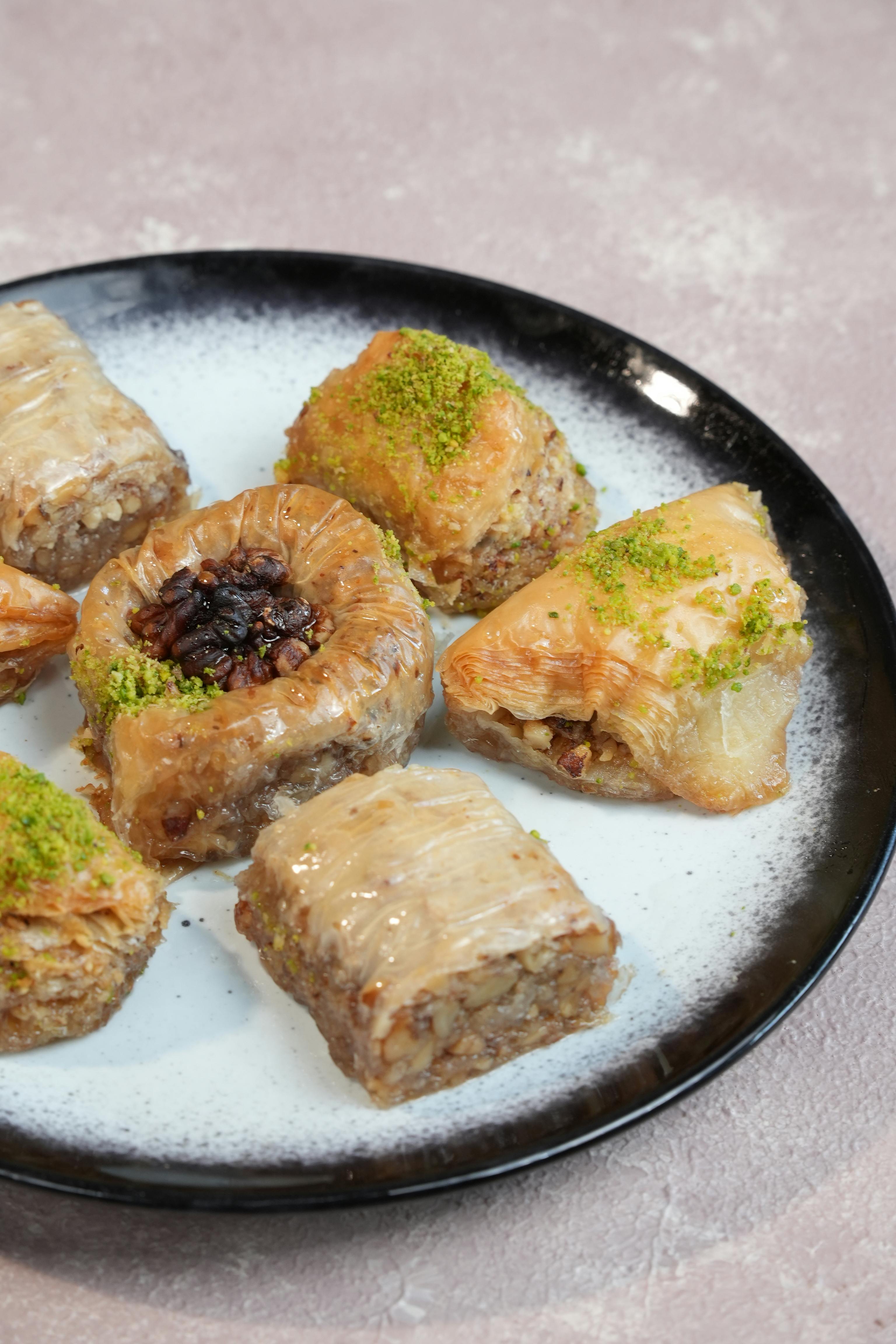
This homemade baklava recipe produces the real thing — dozens of shatteringly crispy phyllo layers filled with spiced walnuts and pistachios, soaked in a honey and rose water syrup that perfumes the whole kitchen. People always assume baklava is too complex to make at home. It's not. It's patient work, not skilled work. The technique is simple: layer, butter, fill, butter, layer, bake, pour syrup. The only things that matter are good phyllo, generous butter, and the hot-pastry-cold-syrup rule.
Baklava has been made across the Middle East, Turkey, Greece, and Central Asia for centuries. Each tradition has its own preferences: Turkish baklava uses pistachios and is lighter on the spice; Greek baklava uses walnuts with cinnamon and honey; Lebanese versions often include orange blossom water and pine nuts; Persian baklava features cardamom and rose water. This recipe sits happily between traditions, using both walnuts and pistachios with a honey syrup perfumed with rose water and a hint of cardamom — the version most likely to appeal to American palates while staying true to the classic.
The essential technique insight for crispy baklava: every single sheet of phyllo must be fully brushed with melted butter, all the way to the edges. Unbuttered areas stay pale and papery rather than turning golden and crispy. Use a pastry brush and work quickly — phyllo dries out and tears if you spend too long. Keep the unused phyllo stack covered with a barely damp towel while you work.
The syrup must be cooled to room temperature before it goes over the hot-from-the-oven baklava. This temperature contrast is what drives rapid, even absorption — the hot pastry acts like a sponge for the cooler syrup, pulling it in quickly throughout all layers. If you pour hot syrup over hot baklava, the phyllo steams and loses its shatter. Let the syrup cool while the baklava bakes — the timing works out perfectly.
The Phyllo Technique: What Makes Baklava Crispy
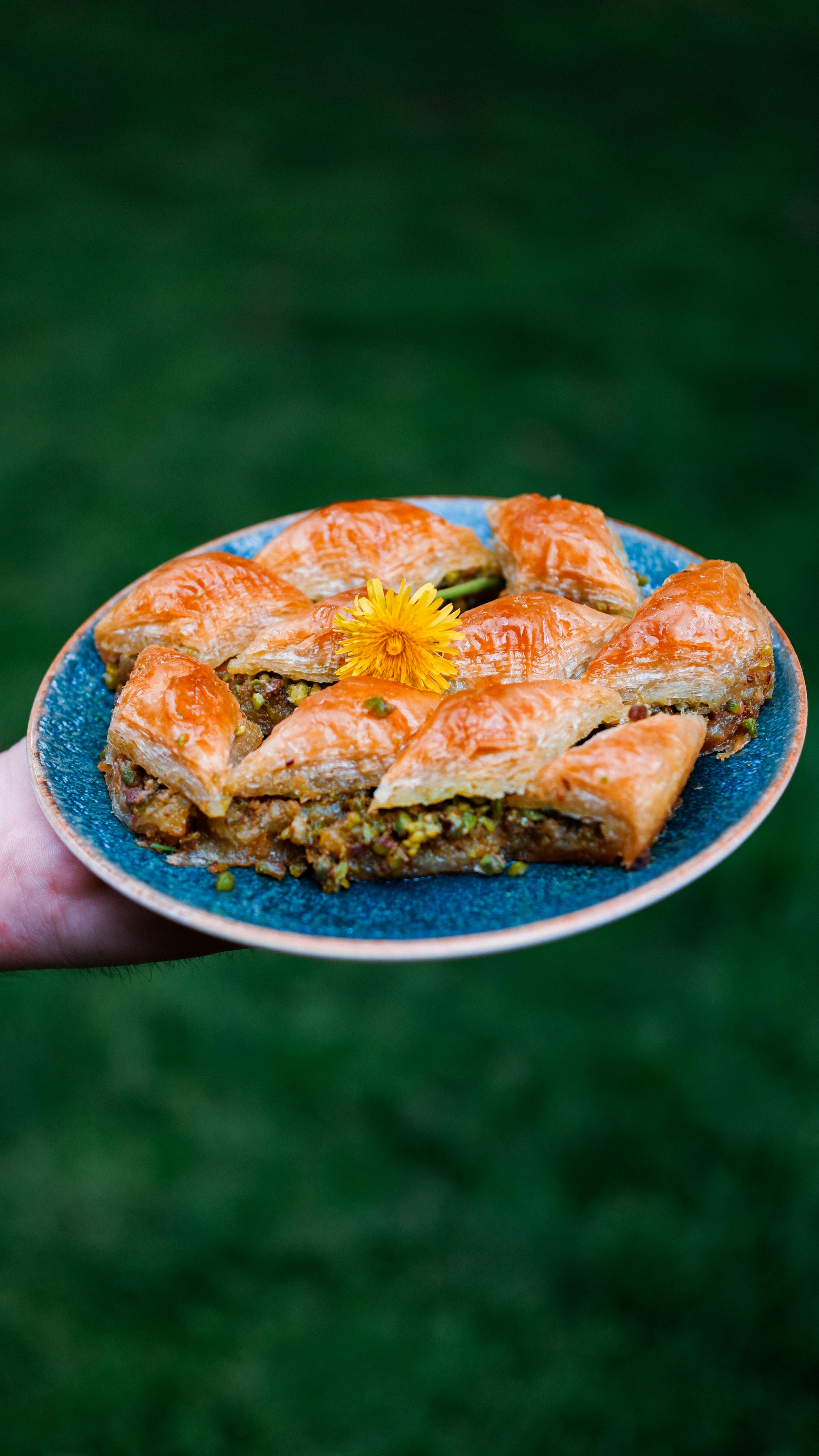
Phyllo (also spelled filo) is paper-thin pastry dough that's sold frozen in most grocery stores. The key to working with it successfully is speed and coverage. Work in a cool kitchen if possible (heat dries out phyllo faster), keep unused sheets covered with a barely-damp towel, and have your melted butter and pastry brush ready to go before you open the phyllo package.
When a sheet tears — and some will — don't panic. Place it in the pan as best you can, butter it, and continue. The tears won't show in the finished baklava and don't affect the crispiness. Multiple slightly torn layers are completely fine. The only sheets where perfection matters are the very top few, which form the visible surface of the finished baklava.
Cut the baklava before baking, not after. Pre-baking cuts allow steam to escape during baking and let the syrup penetrate all the way to the bottom after. Post-baking cutting shatters the crispy phyllo and looks rough. Use a sharp knife and a ruler if you want clean diamond shapes — cut diagonally from corner to corner, then make parallel cuts 2 inches apart across the pan.
Storage and Serving
Baklava improves with time — it's genuinely better after 24 hours as the syrup fully penetrates all layers. Store at room temperature, covered loosely (not sealed — an airtight container traps moisture and makes the phyllo soft). Properly stored baklava keeps for up to two weeks at room temperature. Refrigeration is not recommended. Serve at room temperature with strong Turkish coffee or black tea.