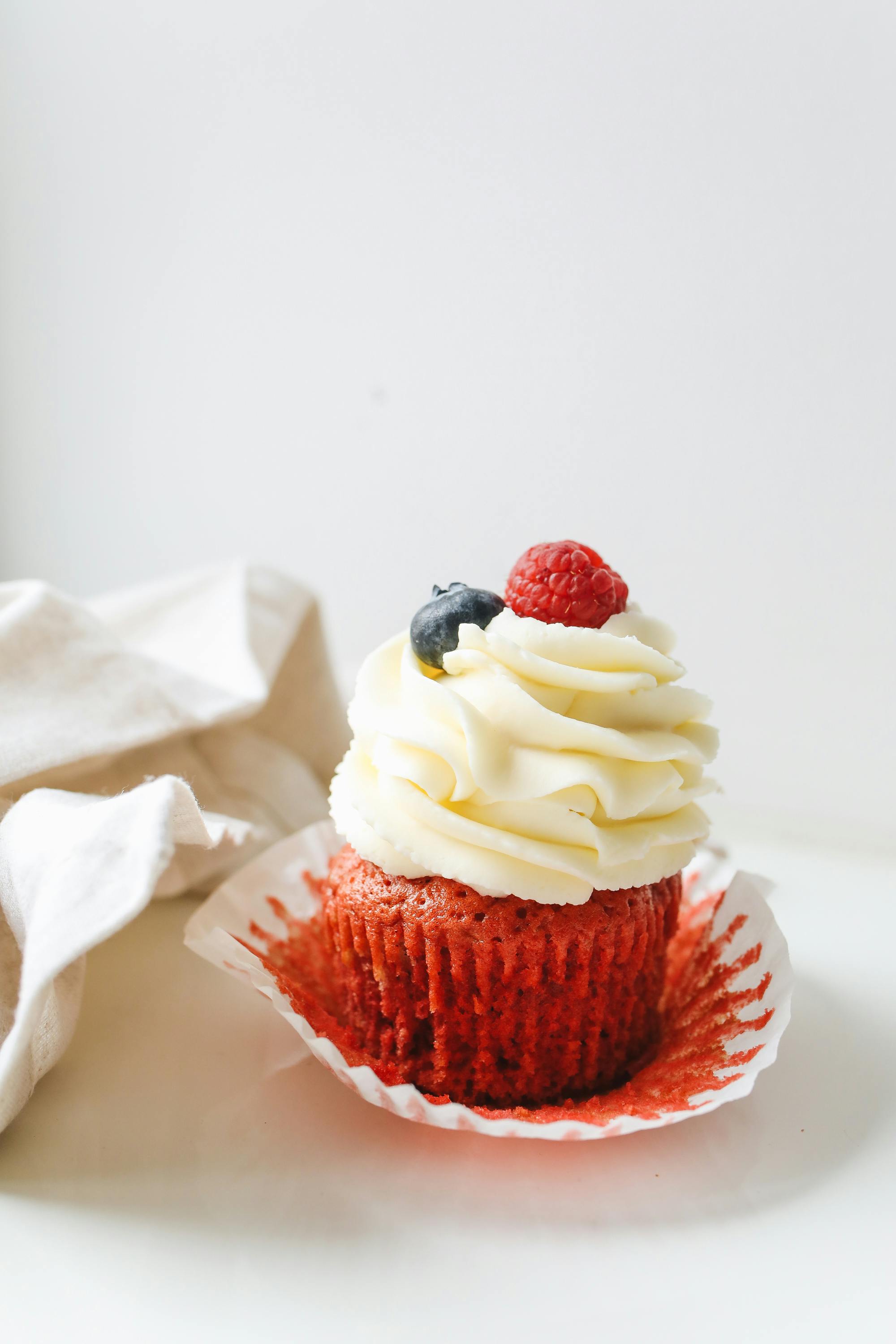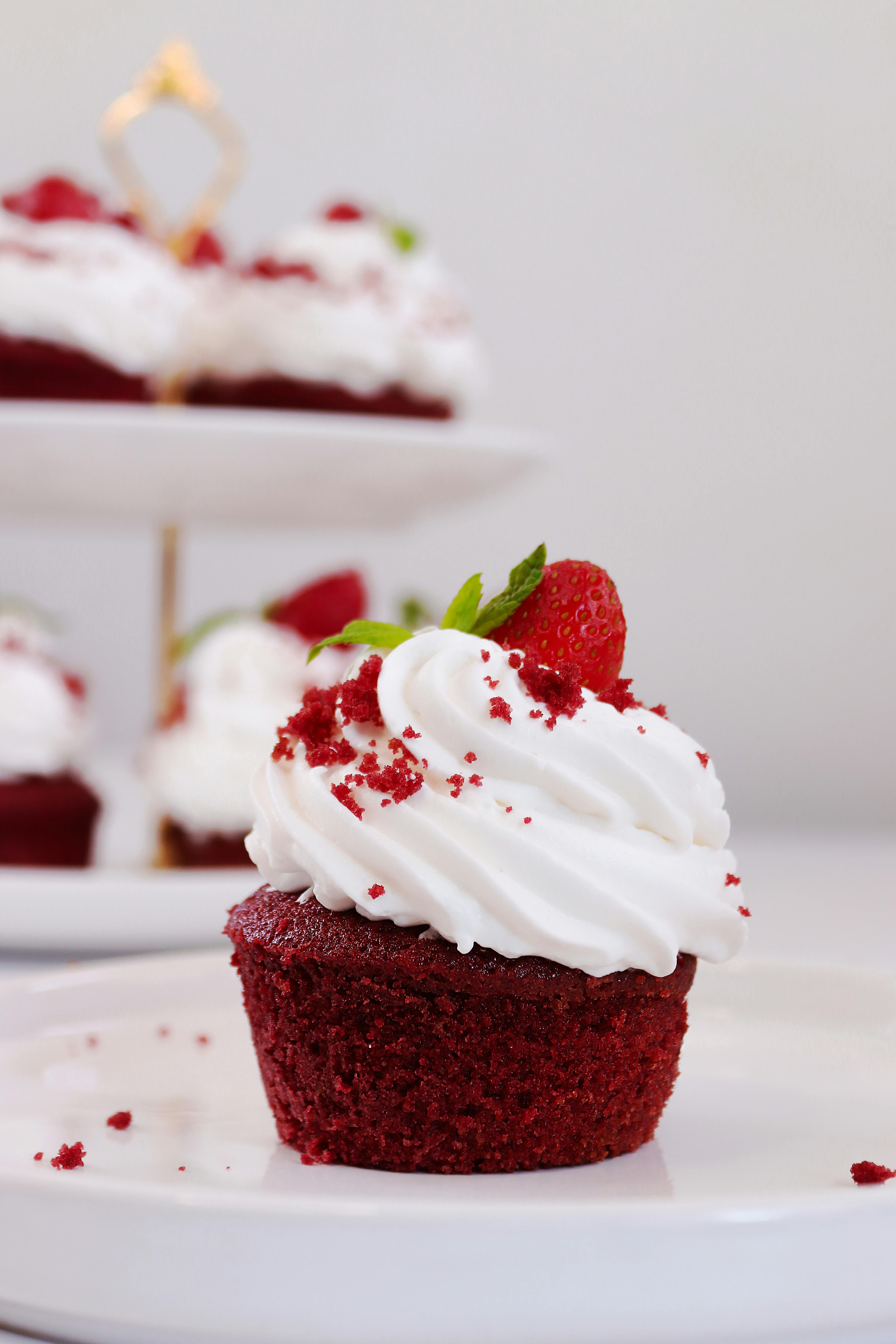
This red velvet cupcakes recipe produces the moistest, most velvety crumb you've ever had from a home oven — with a thick, tangy cream cheese frosting that holds its shape beautifully and doesn't slide off the moment the cupcakes hit a warm room. I've tested dozens of variations, and this is the version that gets texted back to me by readers with just one word: perfect.
Red velvet is one of those recipes that seems intimidating but is genuinely straightforward once you understand what makes it tick. The distinctive deep red color traditionally came from a chemical reaction between natural cocoa and acidic ingredients like buttermilk and vinegar — but modern Dutch-process cocoa is alkalized and won't produce that reaction, so nearly every recipe today uses red food coloring. The cocoa is still essential though: it's present in just enough quantity to give the cake a subtle chocolate depth without making it taste like a chocolate cupcake.
The real secret to a moist red velvet cupcake is the combination of buttermilk, oil, and vinegar. Buttermilk adds tang and tenderness by slightly breaking down the gluten. Vegetable oil — rather than melted butter — keeps the crumb moist for days longer because oil coats flour proteins differently than solid fat. And the small amount of white vinegar reacts with the baking soda to give just the right rise without a bitter aftertaste.
The cream cheese frosting in this recipe is thick, pipeable, and tangy — not the runny, sliding mess that ruins so many red velvet presentations. The key is using full-fat block cream cheese (not spreadable cream cheese in a tub), making sure both the cream cheese and butter are at true room temperature, and beating the mixture until it's completely smooth and fluffy before adding the powdered sugar.
Why This Red Velvet Cupcakes Recipe Works Every Time
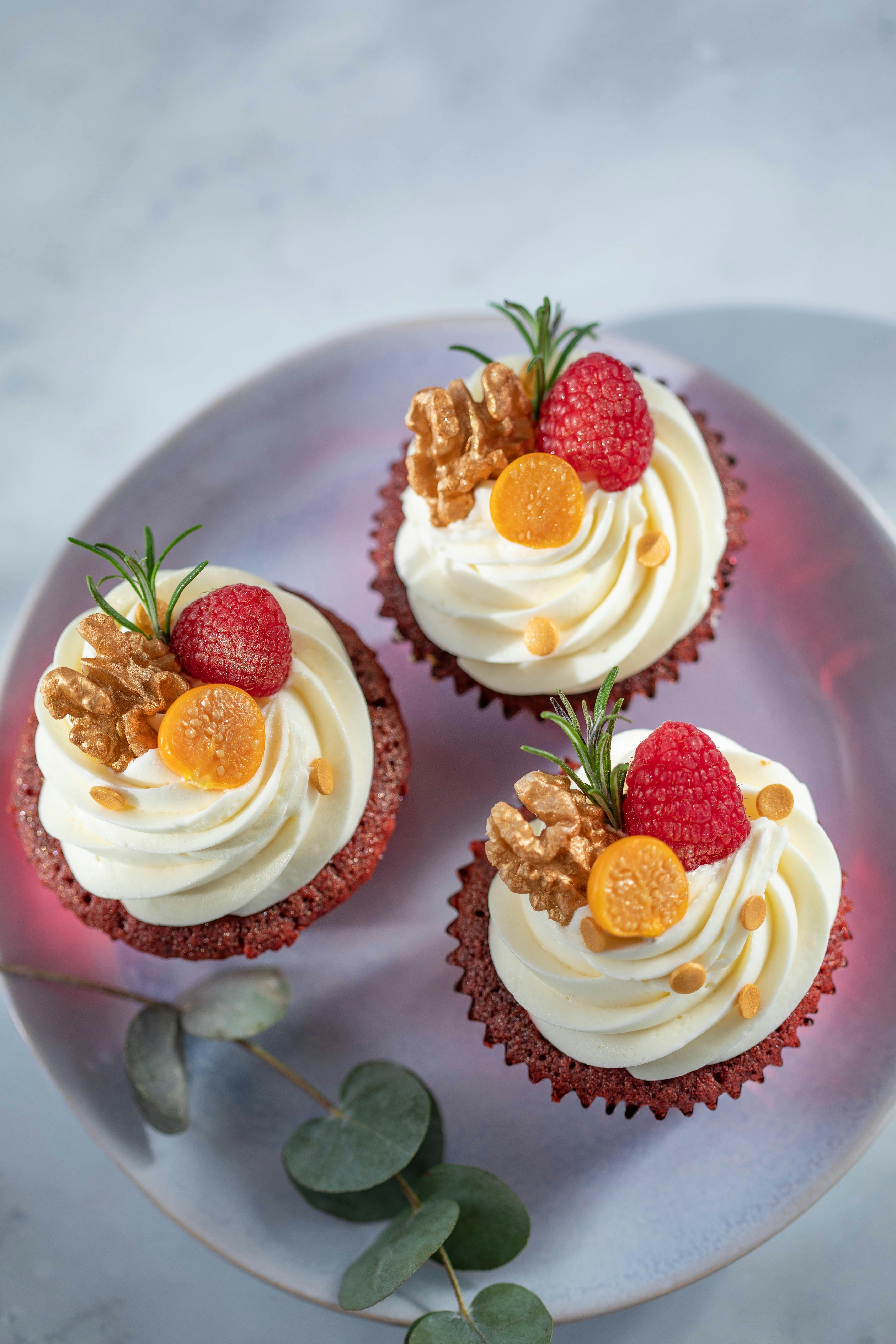
The balance of fat and acid is what separates a great red velvet cupcake from a mediocre one. At 1/2 cup of oil, this recipe hits the sweet spot — enough fat for a tender, moist crumb without the greasy mouthfeel you get when oil is overdone. The 1/2 cup of buttermilk provides acidity that keeps the crumb fine-textured and the color vibrant. And the tablespoon of white vinegar activates the baking soda for a controlled, even rise that doesn't dome too aggressively or collapse.
One tablespoon of cocoa powder is exactly the right amount. Use more and the cupcakes start tasting like chocolate cake. Use less and the cocoa note disappears entirely. You want it as a background flavor — present but not identifiable. When someone bites into a perfect red velvet cupcake, they should taste something familiar yet slightly mysterious, not obviously chocolate.
Filling the liners exactly 2/3 full is non-negotiable. Overfilling leads to muffin-top overflow and flat bottoms; underfilling gives you domed stumps that look awkward under frosting. A standard ice cream scoop or a 1/4-cup measuring cup makes this consistent across all 12 cupcakes.
The Cream Cheese Frosting: Getting It Right
The frosting for these red velvet cupcakes needs to be stiff enough to pipe cleanly but soft enough to swirl smoothly. Room temperature is everything here — cold cream cheese will never fully incorporate with the butter and you'll end up with lumps. Set both out of the refrigerator at least 45 minutes before starting.
Beat the cream cheese and butter together first on medium-high speed for a full 2 minutes — this aeration is what makes the frosting light and pipeable rather than dense and heavy. Add the powdered sugar gradually (not all at once) to prevent it from flying out of the bowl. Once all the sugar is incorporated, beat for one more minute. The finished frosting should hold stiff peaks when you pull the beater away.
If your frosting is too soft to hold its shape (sometimes happens on warm days), refrigerate the bowl for 15 minutes before piping. If it's too stiff, add 1 tablespoon of heavy cream and beat briefly to loosen it.
Storage and Make-Ahead Tips
Unfrosted cupcakes can be stored at room temperature in an airtight container for up to 2 days. They actually taste better on day two — the crumb softens and the flavors meld. The cream cheese frosting should be kept refrigerated, so once frosted, store the cupcakes covered in the fridge. Remove them 30 minutes before serving to let the frosting soften back to its ideal texture.
For parties or events, bake and cool the cupcakes the day before, make the frosting fresh the morning of, and pipe right before serving. This approach always yields the best-looking, best-tasting results.