
This spaghetti carbonara recipe is the real thing — silky, glossy, deeply savory, made with nothing but eggs, aged cheese, cured pork, and pasta water. No cream. No garlic. No onion. Just five ingredients doing what only they can do when combined with the right technique. Once you understand how carbonara actually works, you'll wonder how any recipe ever convinced you that cream was necessary.
Carbonara is a Roman dish, and like all great Roman pasta recipes, it achieves a complexity that looks impossible from its ingredient list. The "sauce" is not a sauce at all — it's an emulsion. Starchy pasta water acts as a stabilizer, egg proteins gently cook against the residual heat of just-drained pasta, and rendered fat from the pork ties it all together into something glossy, rich, and completely unlike anything cream could produce. The cream version is heavier, blunter, and ironically less "creamy" in the sense that matters most: that coating, clinging, coat-every-strand texture.
The most important skill in carbonara is temperature control. The egg mixture needs to cook enough to become a sauce, but not so much that it scrambles into clumps. This happens by removing the pan from direct heat before adding the eggs, and by having enough pasta water on hand to adjust the consistency. Too thick? Add water. Too loose? Toss on very low heat for 30 more seconds. With a little practice, you'll nail it every time.
On ingredients: guanciale (cured pork cheek) is traditional and has a richer, fattier flavor than pancetta. Pancetta is easier to find in American grocery stores and is an excellent substitute. Smoked bacon works too — it changes the flavor profile to something smokier and less traditional, but it's still delicious. For the cheese, freshly grated Pecorino Romano is non-negotiable; pre-grated cheese from a can won't melt into the sauce properly and will make it grainy.
The Technique: Why Carbonara Sauce Doesn't Scramble
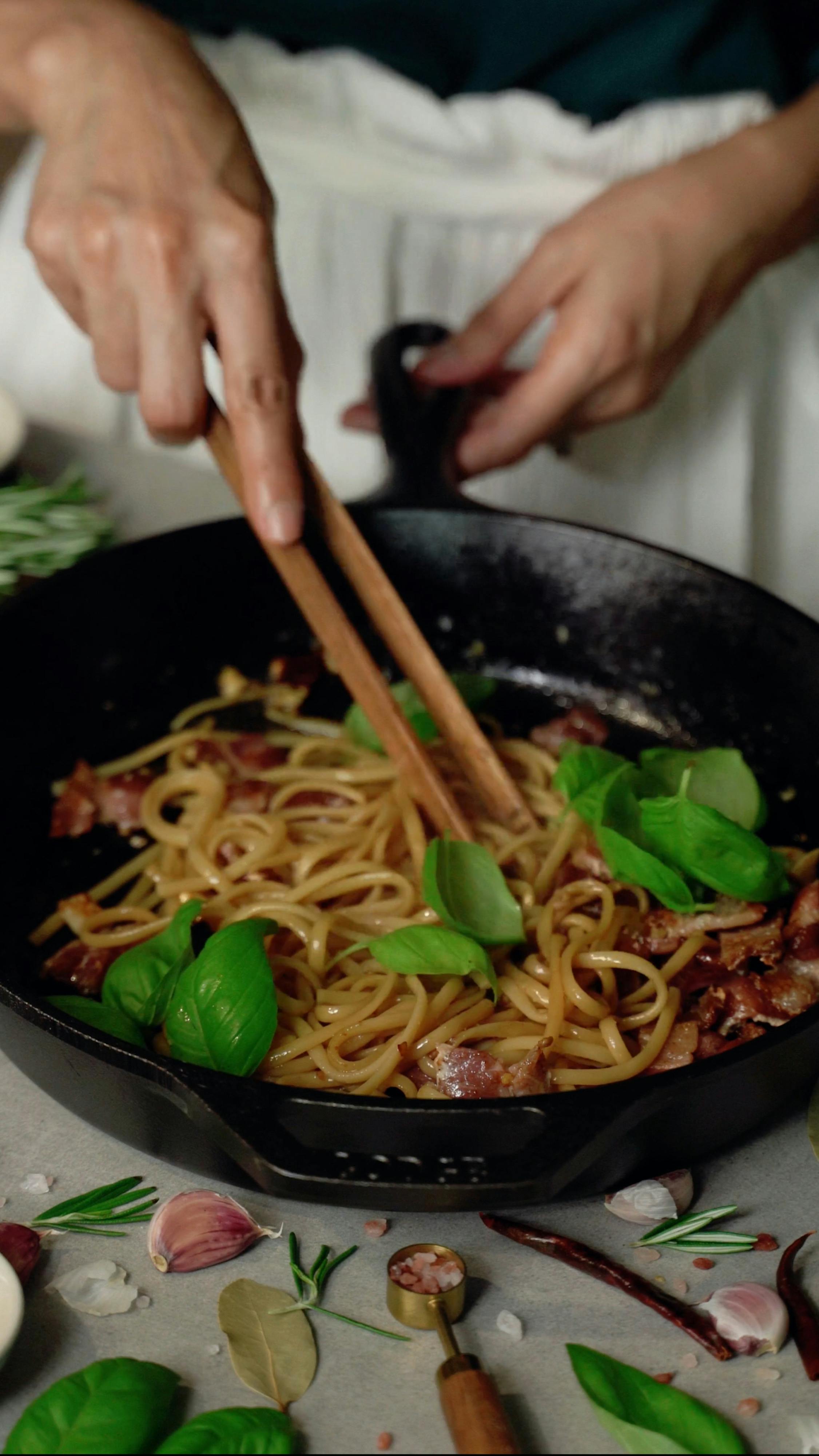
Eggs scramble at around 160°F. Freshly drained spaghetti and a hot pan together are well above that temperature. The trick is using that heat as a tool rather than an enemy. When you remove the pan from the burner before adding the egg mixture, the temperature begins to drop. Tossing the pasta continuously — constantly moving it — distributes the heat and prevents any one spot from getting hot enough to scramble. The starch from the pasta water further stabilizes the eggs, raising the temperature at which they coagulate and giving you more control.
Always start with less pasta water than you think you need. Add a tablespoon at a time while tossing. The sauce should just coat the pasta — not pool at the bottom of the bowl. If it's too thick and starts to clump, add water. If it looks wet and soupy, toss for 30 more seconds without adding water. The target is silky, glossy strands that cling and separate cleanly when you fork up a bite.
Storage and Reheating
Carbonara is best eaten the moment it's made. The sauce stiffens as the pasta cools and absorbs moisture, making day-two carbonara a different — though still decent — eating experience. To reheat: skillet over very low heat with 2–3 tablespoons of water, tossing constantly until the sauce loosens. Microwave reheating works in a pinch with a splash of water, covered, on low power.
For parties or meal prep, cook and crisp the pancetta ahead of time. Grate your cheese and mix the egg mixture in a bowl. Cook the pasta to order — the assembly from that point takes only 3–4 minutes.