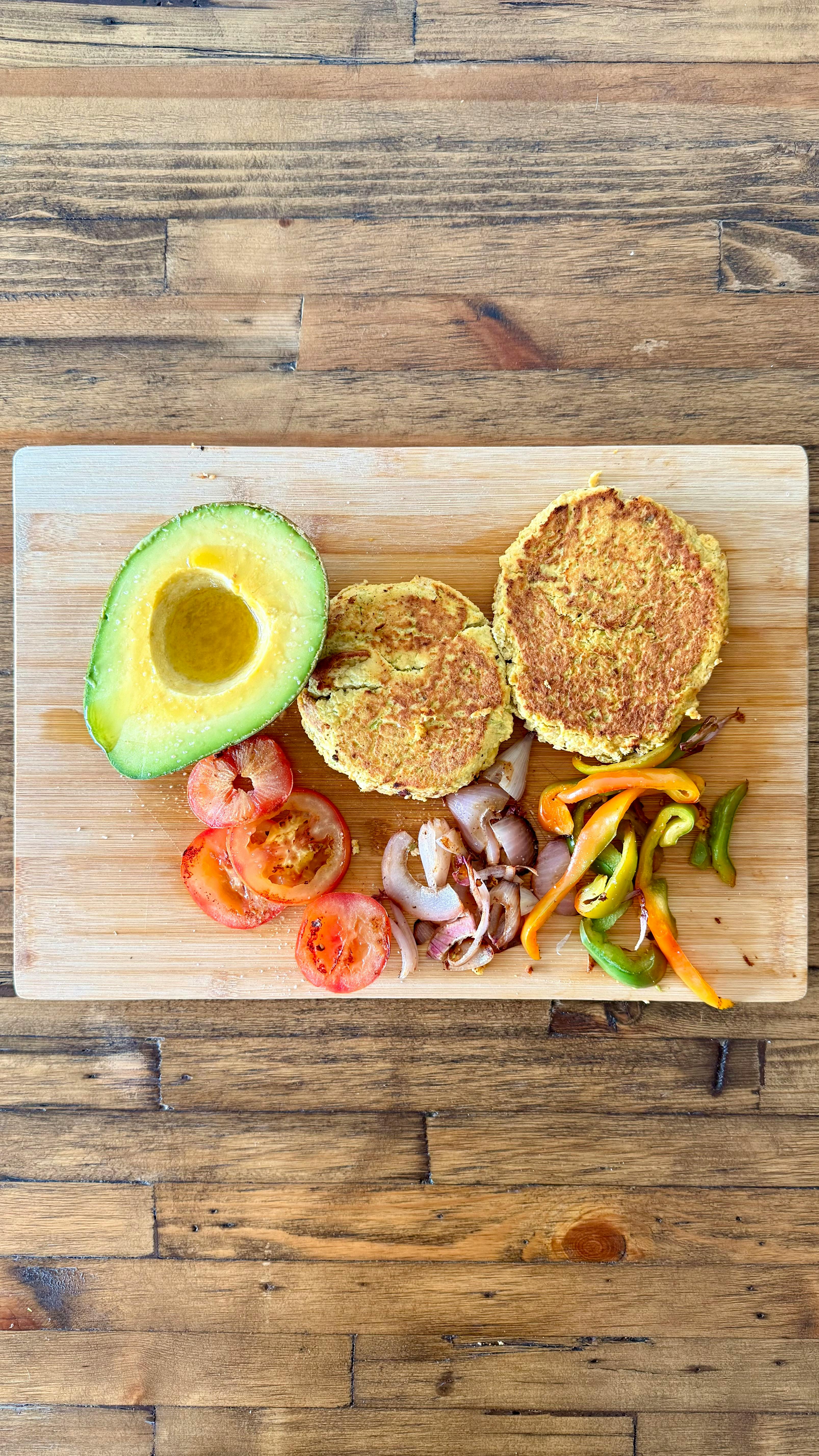
This veggie burger recipe is the one that converted every skeptic at my table — a chickpea and black bean patty with a genuinely crispy crust, hearty interior, and enough bold seasoning that you don't feel like you're eating a compromise. The secret is in three techniques: completely dry beans, a brief refrigerator chill before cooking, and enough patience to let the first side form a full crust before flipping.
The single biggest reason homemade veggie burgers fall apart is moisture. Canned beans are packed in liquid and absorb more as they sit. Before doing anything else with them, spread the drained chickpeas and black beans on a paper-towel-lined sheet pan and pat them dry — really dry. Give them 10 minutes on the paper towels, blotting gently with more towels from the top. This step takes two minutes and makes the difference between a patty that holds together and one that crumbles the moment a spatula touches it.
The texture of the mash matters as much as the dryness. You want roughly mashed — a mixture of broken beans and some whole ones, with visible texture throughout. Smooth, hummus-like mash produces dense, gummy patties that don't crisp properly. The whole beans create structural variation that helps the patty hold its shape and gives each bite something to chew on.
The seasoning in this recipe is assertive: smoked paprika for depth, cumin for earthiness, chili powder for a subtle kick, soy sauce for umami. These four spices plus garlic and red onion give the patty a flavor complexity that bean burgers without proper seasoning completely lack. Taste the mixture before forming patties — it should be well-seasoned and slightly over-salted when raw (it mellows with cooking).
The Chill Step: Why It Matters
After forming the patties, 15–30 minutes in the refrigerator does two things: it firms up the mixture (the breadcrumbs absorb residual moisture), and it drops the surface temperature slightly — cold patties develop a better, more even crust in a hot pan than room-temperature patties, which tend to soften and spread at the edges before the surface sets.
When cooking, resist the urge to move the patties for the first 4–5 minutes. The crust formation is structural — it holds the burger together during the flip. Flip too early and the patty will still be soft in the center with no crust to provide support, and it will break. Wait until you can see a golden-brown rim around the bottom edge of the patty before flipping. A good crust is visible from the side. If it slides easily when you shake the pan, it's ready to flip.
Topping Suggestions
This veggie burger is robust enough to handle bold toppings. Half a sliced avocado and a thick slice of tomato are the classic complement — the creaminess of the avocado with the acidity of the tomato is a perfect contrast to the smoky bean patty. For a full build: toasted brioche bun, a smear of garlic mayo on both sides, sliced red onion, crisp lettuce, tomato, avocado, and a drizzle of sriracha. A fried egg on top takes it from excellent to extraordinary.